New
Strategy Video
Reading the 2026 Card: Section by Section
A full walkthrough of every hand category on this year's card.
This week
Your all-access membership to learn, improve, and stay current with American Mahjong. New resources land every week — your library keeps growing.
Your membership is alive and growing. New resources land here the moment they're added.
Strategy Video
A full walkthrough of every hand category on this year's card.
This week
New Printable
Print-and-go tracker for every pass, with space for notes.
This week
Member Tip
The counterintuitive play that wins more hands.
Just added
Card Update
How to build the 2468 hand and when to commit to it.
Just added
Real tips, real table talk — pulled straight from Instagram. Tap any post to view it, and follow for daily inspiration.

🀄🚨 DON’T PICK A MAHJONG HAND WITHOUT AN EXIT PLAN! Here’s a card strategy every beginner should start practicing: When you find a possible hand, keep looking. 👀 Can you find another hand on the card that uses several of the SAME tiles? THAT gives you options. If Plan A starts falling apart, you may be able to pivot to Plan B without completely rebuilding your rack. 🙌 The card isn’t just showing you possible winning hands — it’s giving you possible PATHS. 🀄 Find your first hand. 👀 Find another possibility. 🔄 Look for overlapping tiles. 🎯 Keep your options open. That’s how you start thinking strategically! 💬 Do you usually have a Plan B when you play? 💕 Follow Ms. Mahj for more beginner American Mahjong tips! #AmericanMahjong #MahjongForBeginners #MahjongStrategy #MahjongTips #LearnMahjong NMJL MahjongCard BeginnerMahjong ModernMahj

🎂💕 SORRY I DISAPPEARED, Y’ALL! Ms. Mahj had a VERY important job this weekend… We had to celebrate Jenny’s birthday! 🎉🥳 But I’m BACK, sugar, and it’s time to get those Mahjong brains working again. 😂🀄 Today’s Beginner Tip: Don’t just count how many tiles you need. Pay attention to how much GAME you have left. You might look at your rack and think: “I’m only TWO tiles away!” Great! 👏 But how many opportunities do you realistically have left to get those tiles? As the wall gets shorter, start looking at the bigger picture. 🀄 How close is your hand? 👀 What’s already been played? ⏳ How much game is left? 🎯 How realistic is your path to Mahjong? That’s the difference between simply building a hand and beginning to think strategically. 📌 SAVE this one for game night! And tell me below: Did you miss Ms. Mahj this weekend?! 😂👇 📲 Want to learn American Mahjong step-by-step? Tap the link in bio and check out Modern Mahj! 💕 Love ya, Mean it! — Ms. Mahj #AmericanMahjong #MahjongForBeginners #LearnMahjong #MahjongStrategy #MahjongTips BeginnerMahjong ModernMahj NMJL MahjongCommunity

🀄 STOP WAITING FOR ONE PERFECT TILE! Here’s a simple American Mahjong strategy beginners can start using immediately: Instead of only asking: “What tile do I need?” Start asking: “How many different tiles could improve this hand?” 👀 Imagine you’re considering two possible hands. One leaves you waiting for a couple of VERY specific tiles. The other gives you several different useful draws that could move you closer to Mahjong. Which path gives you more opportunities? THAT’S what you want to start noticing. 👏 As you improve, look at your rack, the discard pile and what could realistically still help you. The goal isn’t simply finding a hand that technically works. You want a realistic PATH to Mahjong. 🀄 📌 SAVE this strategy tip for your next game. 💬 Have you ever chased ONE tile almost the entire game? 😂 📲 Want to learn American Mahjong step-by-step? Tap the link in bio and start your FREE 3-day trial inside Modern Mahj! 💕 Love ya, Mean it! — Ms. Mahj #AmericanMahjong #MahjongForBeginners #LearnMahjong #MahjongStrategy #MahjongTips BeginnerMahjong NMJL ModernMahj MahjongCommunity

🀄 HOW DO YOU CHOOSE A HAND IN AMERICAN MAHJONG? Here’s a strategy shift that can make choosing a hand SO much easier: Stop asking, “Which hand do I want?” Start asking: “Which hands do my TILES support?” 👀 Look at the strengths already sitting on your rack: ✨ Do you have pairs? ✨ Do you have matching tiles or multiples? ✨ Which hands use the MOST tiles you already have? ✨ How many very specific tiles would you still need? ✨ Can some of your tiles work toward TWO possible hands? That last one is especially helpful because it gives you flexibility if the game doesn’t go according to Plan A. Don’t fall in love with a hand and then try to force your tiles into it. Let the rack lead you. 🀄💕 📌 SAVE this for the next time that Mahjong card has you completely overwhelmed. 😂 💬 What’s harder for YOU: choosing your hand or knowing when to pivot? 📲 Want help learning American Mahjong step-by-step? Tap the link in bio and start your FREE 3-day trial inside Modern Mahj! 💕 Love ya, Mean it! — Ms. Mahj #AmericanMahjong #MahjongForBeginners #LearnMahjong #MahjongStrategy #MahjongTips BeginnerMahjong MahjongHand NMJL ModernMahj MahjongCommunity
Want the full feed? Follow @themrsmahj
Your Modern Mahj Membership grows every week — here's everything waiting for you.
Complete Beginner Course
Printable Resource Library
Video Lesson Library
Strategy Guides
Charleston Guides
Annual NMJL Card Walkthroughs
Weekly Member Tips
Exclusive Member Downloads
New Resources Added Regularly
Future Member Discounts
Eight simple steps from zero to your first Mahj. No experience needed — we'll explain everything like you're 10 years old.
Step 1 of 8
A tile-matching game with friends
American Mahjong is a game for 4 players. You play with 152 tiles — little rectangles, like dominoes but thicker. Everyone gets 13 tiles, and your job is to collect tiles that match one of the winning "recipes" on a special card. Think of it like following a recipe to bake a cake — you need exactly the right ingredients. The first person to complete their recipe calls out "Mahj!" and wins the round. It's like Rummy, but with tiles instead of cards, and way more fun.
NMJL standard — everything you need at a glance
These rules follow the National Mah Jongg League (NMJL) standard. Always confirm house rules with your group before play — some groups add penalties for miscalled tiles, dead hands, or false Mah Jongg.
Step 2 of 8
Your 144 pieces, explained
You've got three suits, some special tiles, and wild cards. Here's the whole family — every tile type you'll see on the table.
Bams (Bamboo)
Sticks numbered 1–9. Four of each.
Craks (Characters)
Chinese writing + a number, 1–9. Four of each.
Dots (Circles)
Circles numbered 1–9. Four of each.
Winds
North, South, East, West. Four of each.
Dragons
Red, Green, and White. Four of each.
Flowers
Pretty tiles. Trade them in for new tiles.
Jokers
The ultimate wild card. Can be ANY tile!
Step 3 of 8
Build the wall, roll dice, deal the tiles
Shuffle & Build the Wall
Everyone shuffles all 144 tiles face-down — get 'em good and mixed! Then each player builds a "wall" — a stack of tiles, two rows high, pushed together in the middle to form a square.
Roll for Dealer
Each player rolls the dice — the highest number becomes the dealer, called "East." Ties? Roll again! East is the boss of the round.
Break the Wall
East rolls the dice a second time to decide where to "break" (split) the wall. Count that many tiles from the right end of East's wall and lift them out. That gap is where dealing begins.
Deal the Tiles
East deals 14 tiles to themselves and 13 to each other player, going counterclockwise. Line your tiles up on your rack, standing up, facing you. Nobody else can see your tiles!
The East Bonus
East has higher risk and higher reward: if East wins the hand, they get paid DOUBLE — and they stay as East for the next hand. The deal only passes to the right when someone else wins.
Step 4 of 8
Pass tiles, shake things up
The Charleston is a special tile-passing ritual before real play begins. It's the most important strategic moment of the whole game — it can make or break your hand. The tiles you start with are random, but the Charleston gives you a chance to trade away tiles you don't need and pick up ones you do. It happens in two rounds.
Round 1 — The First Charleston
Pass 3 to the right
Pick 3 tiles you don't want. Pass them face-down to the player on your right.
Pass 3 across
Pick 3 more. Pass them to the player across from you.
Pass 3 to the left
Pick 3 more. Pass them to the player on your left.
After each pass, pick up what was passed to you and add it to your rack before choosing your next 3.
The Blind Pass (Optional)
After the third pass of Round 1, you can do a "blind pass" — instead of passing tiles you chose, you pass tiles you just received without even looking at them. It's a gamble, but sometimes it pays off!
Round 2 — The Second Charleston
Pass 3 to the left
Now we reverse direction! Pick 3 and pass left.
Pass 3 across
Pick 3, pass across.
Pass 3 to the right
Pick 3, pass right.
The Courtesy Pass (Optional)
After both rounds, any two players who agree can swap 0 to 3 tiles across the table. It's a final chance to fine-tune your hand.
Why it matters
The Charleston is when you decide your strategy. Going for a Bam-heavy hand? Pass away your Craks and Dots. See Flowers coming your way? Switch to a Flower recipe. Pay attention to what others pass you — it hints at what they're collecting (and what's safe to discard later).
Step 5 of 8
Get organized and pick your goal
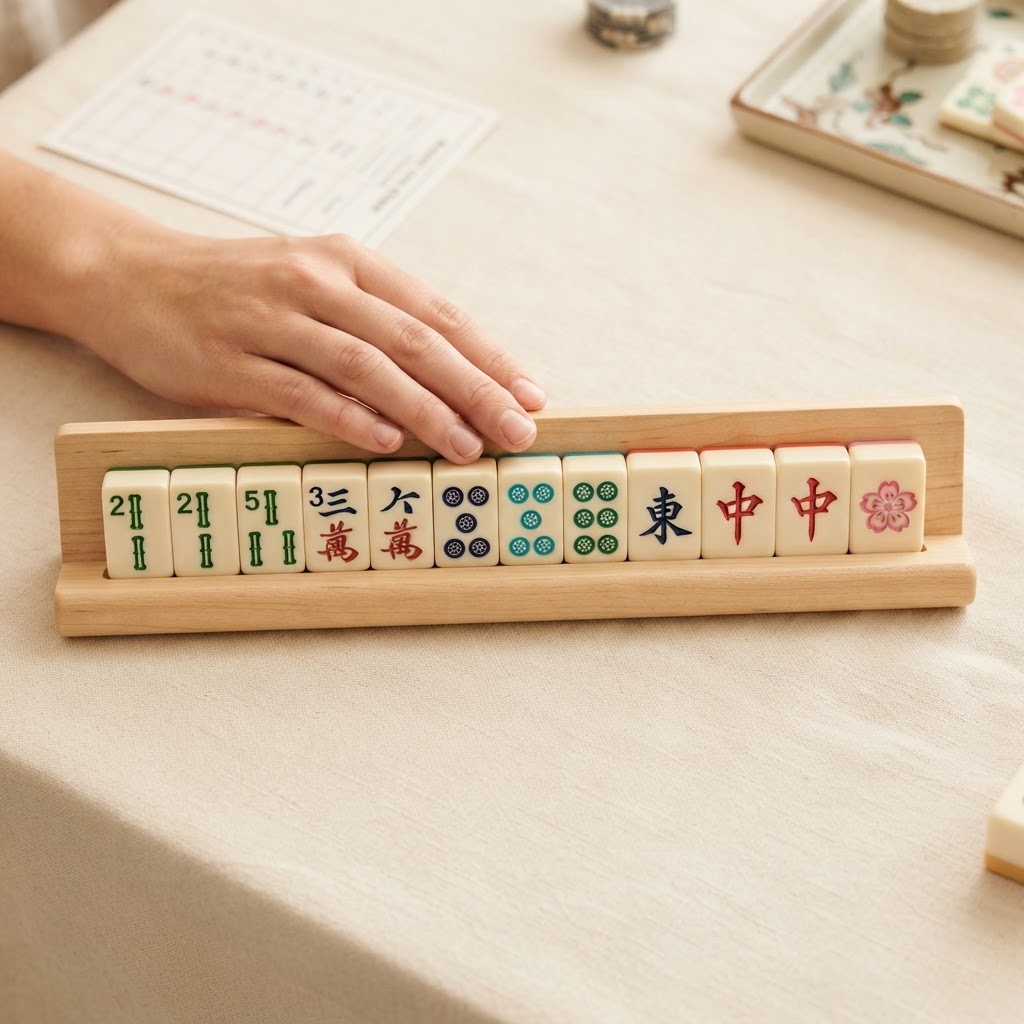
Part 1 — Sort Your Hand
Arrange your tiles by suit — all Bams together, all Cracks together, all Dots together, then Winds, Dragons, and Flowers/Jokers at the end. A tidy rack helps you see what you've got at a glance. Think of it like organizing your closet by color.
Part 2 — Read the Card
The card is a list of winning "recipes." Each recipe shows exactly which tiles you need to collect. It's organized by categories and colors. Here's how to read it:
The Colors Mean Something:
Blue hands — Build these using tiles you draw AND tiles you claim from discards.
Green hands — "Concealed." Build entirely from your own draws — no claiming! Harder, worth more.
Red hands — Special hands, often with unique patterns. Read carefully!
The Notation (your recipe language):
5 BamA single tile — one 5 of BamFFTwo FlowersXJoker (wild card — can be anything)2345A run of consecutive tiles in one suitDDTwo Dragons (type is specified)How to Pick Your Recipe:
Example Recipe:
11 22 333 4444 FF = a pair of 1s, a pair of 2s, three 3s, four 4s, and two Flowers. Match those tiles and you've got Mahj!
Step 6 of 8
The heartbeat of the game
Play goes counterclockwise (to the right). On your turn: 1) Draw one tile from the wall. 2) Now you have 14 tiles — look at all of them. 3) Discard one tile face-up in the middle, and say its name out loud: "Five Bam!" You always draw one and discard one — keeping 13 tiles in your hand. The discarded tiles pile up in the middle, and other players can grab them! Your goal with every draw is to get closer to your recipe.
Step 7 of 8
Steal a tile you need
If someone discards a tile you need, you can "call" it — but only if it completes a set. A Pung is 3 of the same tile (like three 5 Bams). A Kong is 4 of the same tile. A Quint is 5 of the same tile (needs a Joker). When you call a tile, you must show (expose) that set face-up on your rack. The catch? Once you expose tiles, everyone can see part of your plan — and you can't change your recipe after that. Calling also skips other players' turns, so it shakes up the turn order.
Step 8 of 8
You win!
When your 13 tiles + 1 drawn tile = a complete recipe from the card, you're done! Set your tiles down face-up and shout "Mahj!" Everyone checks your hand against the card. If it matches — you win! The loser pays the winner chips (or quarters, or whatever you play for). If it doesn't match... that's called a "false Mahj" and there's a penalty. So make sure before you call it!
The American Mahjong card is your menu of winning hands — and it changes every year. Here's your complete guide to the 2026 edition: notation, sections, strategy, and how to choose the right hand from any deal.
The National Mah Jongg League (NMJL) publishes an official card every spring listing every legal winning hand for the year. Think of it as the rulebook for what your 14 tiles need to look like to declare Mahj. The 2026 card replaces the 2025 card entirely — old hands are retired, new ones debut, and familiar patterns shift in value.
You can't play American Mahjong without the current card. Every player at the table references the same card, so everyone is racing toward hands from the same menu. The skill isn't just building a hand — it's choosing the right hand from the options the card gives you.
Card at a glance
The card uses shorthand symbols to describe each hand. Learn these six and you can read any hand on the card. Tap each one to see an example.
Reading suit requirements at a glance
Key insight: The colors printed on each hand tell you how many suits to use — not which suits. One color means one suit only; two colors means exactly two suits; three colors means all three suits must appear. Which specific suits you pick is always your choice based on what you draw.
Single-suit hand
When a hand is printed in only one color (all the tile symbols look the same shade), every numbered tile must come from the same suit. You choose which suit — Bams, Craks, or Dots — but you can only use one.
All tiles in one suit — e.g., all Bams, or all Craks, or all Dots.
Two-suit hand
When a hand uses two colors, you must use exactly two of the three suits. The colors tell you which groups belong to which suit — matching colors must be the same suit, but different colors must be different suits. Which two suits you pick is up to you.
Some tiles from one suit and the rest from a second, different suit.
Three-suit hand
Three colors means all three suits — Bams, Craks, and Dots — each appear in the hand. Each color group maps to a different suit; no two colors can be the same suit.
Tiles split across Bams, Craks, and Dots — all three represented.
The 2026 card is organized into sections by hand type. Knowing the sections helps you scan quickly during play — "I have lots of evens, check 2468" or "I have honors, check Winds & Dragons."
Every card opens with a hand that spells out the current year — 2026. These hands use the numbers 2, 0, 2, 6 arranged across suits and honors. They're the card's signature and a fan favorite.
Pungs and kongs built only from even-numbered tiles: 2s, 4s, 6s, and 8s. No odds allowed. A pair of Flowers typically anchors the hand.
Sequences like 1-2-3, 4-5-6, 7-8-9 across one, two, or three suits. The most flexible category — great for beginners and pivot-friendly mid-game.
Only odd-numbered tiles: 1s, 3s, 5s, 7s, 9s. Mirrors the 2468 section but with odds. Often paired with a Dragon or Flower pair.
Five of a kind — four real tiles plus a Joker. The highest-value section on the card. Commit only when the tiles are clearly flowing your way.
All-honor hands — no suits at all. Built from pungs and kongs of Winds and Dragons. Hard to assemble but pays well, and Jokers slot in perfectly.
Only 3s, 6s, and 9s across suits. A narrow but rewarding category — track every 3, 6, and 9 in the discard pile religiously.
Hands built primarily from pairs rather than pungs or runs. Tricky because Jokers can't substitute in a pair — you need the real tiles.
The 2026 Year Hand
Spelling the year in tiles
Every card opens with a hand that spells the current year. The 2026 hand uses tiles valued 2, 0, 2, and 6 — with Dragons (which have no number) often standing in for the "0." It's the card's signature: a hand only this year's card can offer.
Illustrative example (not an official card hand)
This is an illustrative example — not an official card hand. The real 2026 year hand will use 2-0-2-6 in a specific arrangement the NMJL designs. The concept: spell the year using tile values, with Dragons often standing in for '0.'
Every hand on the card is marked as either concealed or exposed. This single label changes everything about how you play it.
You can claim discards to build exposed sets — pungs, kongs, and quints placed face-up on the table. Faster to build, but opponents see exactly what you need and can play defense against you.
Everything stays hidden until you declare Mahj. You can't claim discards for these hands — every tile must be self-drawn. Slower and harder, but they pay more and keep opponents blind.
The card gives you options — your job is picking the right one. Follow this four-step framework every round.
After the Charleston, count your jokers, Flowers, and pairs. Do you have natural pungs forming? Multiple tiles in one suit? That's your starting direction.
Flip through the card sections. Which hands could your current tiles build toward? Identify two or three feasible options — never just one.
Choose the hand with the most viable path. Once you commit, stick with it — constant switching is how hands die. Have one backup in mind for a fast pivot.
Watch the discards every turn. If key tiles go out, pivot to your backup. If the wall is feeding you, stay the course. Flexibility within commitment.
How to study the 2026 card
Ready to practice what you've learned?
Dive into strategyYou know how to set the table. Now learn the strategy that turns a friendly game into a little healthy competition.
The art of the discard
Every throw is a clue. Learn to read the table.
American Mahjong is equal parts luck and skill — and the skill is where the joy lives. The card changes yearly, but the instincts that separate a good player from a great one don't: patience, timing, and knowing when to go for it versus when to play safe.
Below are the six pillars of advanced play. Read them, practice them, and watch your win rate climb — or at least your reputation as the one nobody wants to sit to the left of.
Pass tiles you can't use — but pass thoughtfully. Give your neighbor junks that won't help their likely suit, and watch what comes back: it hints at what everyone's building. The optional 'blind' pass is a power move when you're chasing a hard hand.
Every hand on the card has a value. Winners get paid by all three opponents; a self-drawn Mahj pays double. Know which hands are worth the gamble — a cheap hand won quickly often beats an expensive hand that never finishes.
Track the discards like a detective. If a player throws a Dragon early, they're likely not chasing a Dragon-heavy hand. Exposed sets tell you what they need — and what's now dead for you.
Don't fall in love with your first hand. Count your jokers and Flowers, identify two or three feasible patterns, and pivot fast when the wall isn't feeding you. Flexibility is how seasoned players win ugly.
Tournaments swap cash for points and reward consistency over luck. Time limits keep it brisk, table etiquette is strict, and you'll rotate seats. Play for the long game — a steady player outpoints a flashy one.
Scoring Deep Dive
Every winning hand on the card has a printed value — that's what each opponent pays you. Values range from 25¢ to 50¢ on a quarter card, or whatever stakes your group agreed on. The card lists the value next to each hand.
If you complete your hand by drawing the winning tile yourself (not calling someone's discard), that's a self-drawn Mahj — every opponent pays you DOUBLE the hand's value. This is the biggest single payout in the game.
East has higher stakes: if East wins, East collects double from everyone. If someone else wins, East pays double to the winner. East stays East until someone else wins — then the deal passes to the right.
A Quint (5 of the same tile using a joker) is worth double the listed hand value. Some groups also pay extra for a hand with multiple jokers. Check your card — hands with jokers are listed at higher base values.
Quick payout reference
Assuming quarter stakes — multiply by your group's stake
You win on a discard
Each opponent pays
You self-draw your win
Each opponent pays
East wins (you're not East)
You pay East
You are East and win
Each opponent pays
You are East and self-draw
Each opponent pays
⚠ False Mahj penalty
If you call "Mahj" but your hand doesn't match the card, you pay all four players the value of the hand you attempted. Always double-check before calling!
Joker Mastery
Jokers substitute for any tile in a Pung (3), Kong (4), or Quint (5). They can only be used in these matching sets — never in pairs, never as a single tile, never in the last exposure of a hand.
If you hold the real tile that a joker is substituting for in someone's (or your own) exposed set, you can swap it — trade your real tile for the joker. You don't need to be in a turn to do this; it's a free action.
If you draw a joker from the wall during your turn, you can exchange it for a real tile in any exposed set on the table — yours or an opponent's. This is a powerful way to pull jokers back into your hand.
Discarding a joker is generous — anyone who needs it can claim it freely (no exposure required). But smart players sometimes bait: throw a tile that looks tempting to force an opponent into a commitment they'll regret.
8 jokers per game
Powerful but restricted
They look like a free pass — but the rules are strict.
Joker no-no's
Advanced play lives in the throw. Master three principles, then study four more winning shapes — each drawn out tile-by-tile.
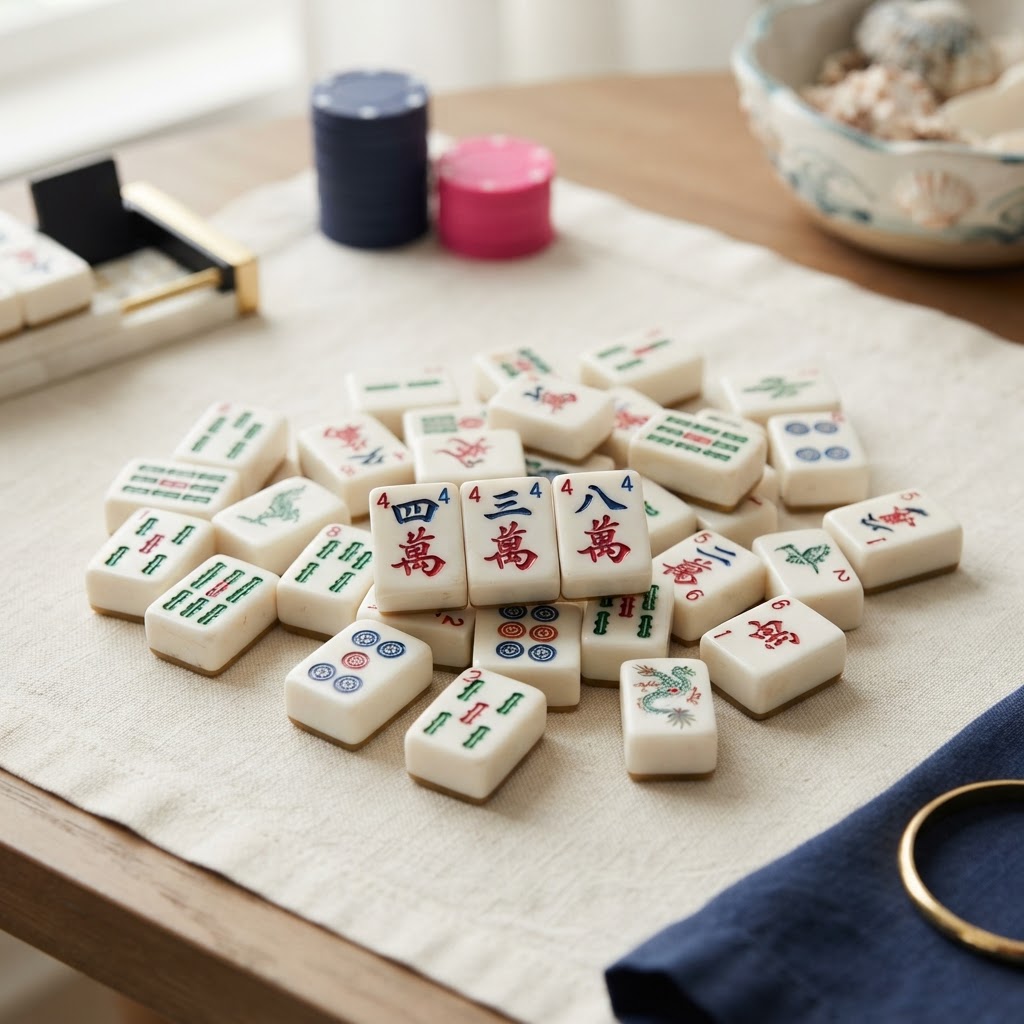
The discard pile is the table's memory. Tiles thrown face-up tell you what opponents don't need — and what's now dead.
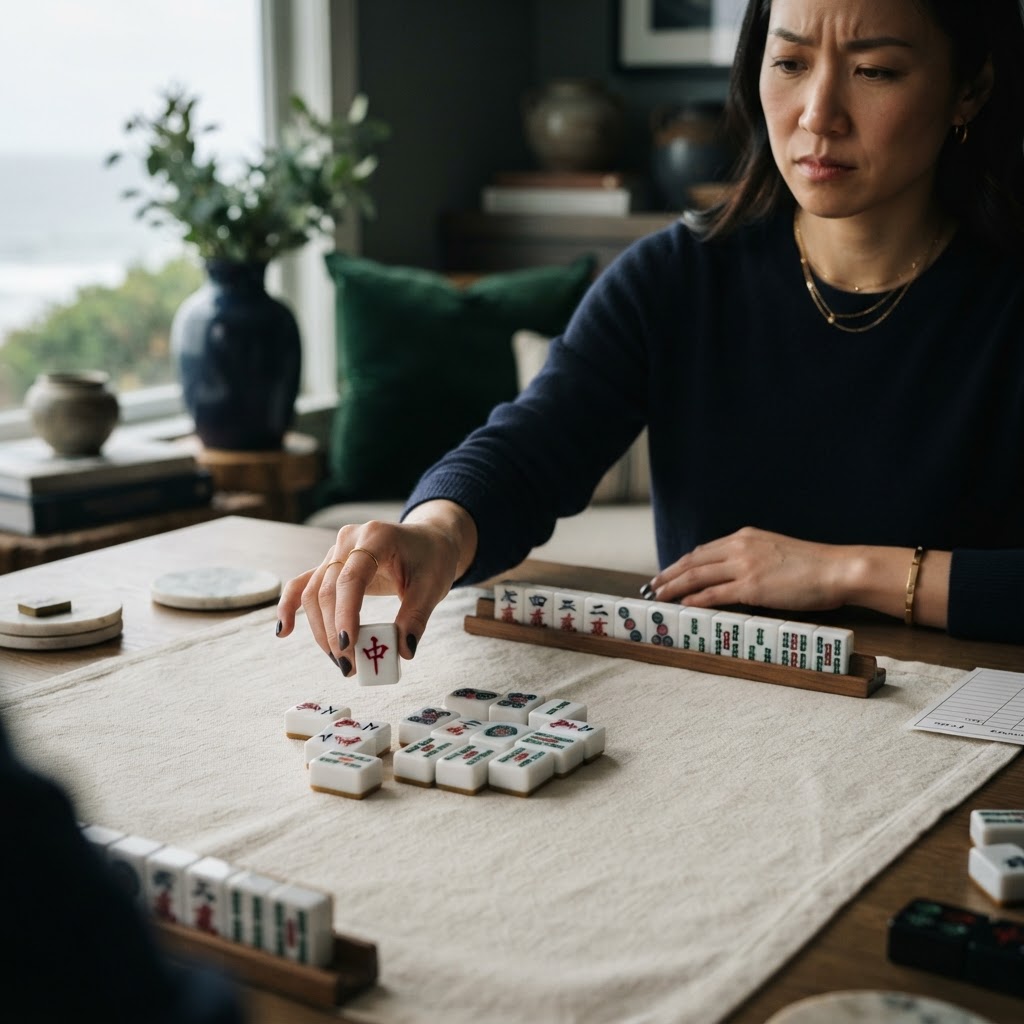
When an opponent is one tile from Mahj, your job flips: stop building, start denying. Throw only tiles already on the table.
The advanced flow, every turn
Step 1
Draw
Pull one tile from the wall. Assess your hand shape.
Step 2
Assess
Do you have a feasible hand? Count jokers and Flowers.
Step 3
Scan discards
What's dead? What's safe? What does everyone want?
Step 4
Discard
Throw the least useful, safest tile. Call it out.
Step 5
Repeat
Draw, assess, scan, discard — until Mahj or the wall ends.
Beyond the basics — higher-value, trickier hands with the exact tile layout and when to commit.
Five of a kind
How to build it
Five identical tiles — four real plus a Joker. The highest-value single set in the game. You'll need the joker and four of a kind, so commit only when the tiles are clearly flowing.
When to commit (or bail)
If a matching tile gets discarded early, your quint dies. Track every copy relentlessly.
Runs only
How to build it
Four runs across two suits plus a pair. Flexible — you can pivot between the two suits mid-game. Avoid exposing early; concealment keeps opponents guessing.
When to commit (or bail)
Once two of a needed tile are out, your run is dead. Have a backup suit ready.
Flowers + jokers
How to build it
A hand built around Flowers and honors. Flowers are auto-matched (you don't expose them like pungs), so this hand stays concealed and pays well. Jokers slot into the honor pungs.
When to commit (or bail)
Flowers are limited to eight total. If yours come slowly, the hand stalls — be ready to pivot.
Paired runs
How to build it
A 'sandwich' structure: a pair wraps around a run, repeated. Tricky to assemble but pays well because opponents can't read your shape from exposed tiles.
When to commit (or bail)
These need exact sequences. If a key middle tile goes out twice, abandon fast — the window is narrow.
Tap a hand to study its shape, then read the discard tactics: what to keep, what to throw, and the trap that sinks most players.
Beginner-friendly
Three consecutive runs in one suit (1-2-3, 4-5-6, 7-8-9), plus a pung and a pair. The most forgiving hand on the card.
Keep these
Hold the edges — 1s and 9s are the hardest run pieces to replace. Keep any pair in your chosen suit; it can become the pung or the pair.
Throw these
Discard honors (Winds/Dragons) and off-suit number tiles early. Once you commit to a suit, throw the other two suits fast to avoid confusion.
The trap
Don't chase a suit that opponents are hoarding. If two players are in Bams, your run is dead — pivot before you're stranded.
Pro tips from the table
Ready to put it into practice?
Grab the strategy printablesWe dealt you 13 random tiles. Sort them in your head, then pick your best move. Instant feedback — no pressure, just practice.
Your 13-tile deal
What's your best move?
Can't round up four? These adapted formats keep the game alive — whether it's a duo, a trio, or just you sharpening your eye.
2-Player Duel
Head-to-head Mahj
Only two of you? You can absolutely still play. The game gets faster and more cutthroat — you'll see each other's discards pile up quickly, and every call matters.
No passing phase — deal and go straight to play. With only two players, trading tiles back and forth is pointless and slows the game down.
Build two parallel walls of roughly 19 stacks each (76 tiles total in the wall). The remaining 76 tiles form the draw pile — or simply build one wall and draw from the top.
East gets 14 tiles and starts. The other player takes 13. Everything else — drawing, discarding, calling — works just like 4-player.
Some pairs assign each player two Winds (East+South vs West+North) so all four directions are represented. Others just play East vs West. Pick your house rule and stick to it.
You can still call a discard for a Pung, Kong, or Quint. With only one opponent, reading their discards is easier — and more dangerous.
Use the standard NMJL card. You complete a hand the same way — 14 tiles matching a recipe, call "Mahj!" and collect your chips.
Pro tips
Every seasoned player has made these mistakes. Learn them now so you don't repeat them at the table — these are the moves that cost you the round (and your pride).
Jokers only work in Pungs, Kongs, and Quints. Never use one to fill a pair or a single tile — it's an illegal hand.
Once a joker hits the discard pile, it's dead. Nobody can claim it — it's out of play for the rest of the round.
When you call a discard and expose a set face-up, it's locked in. You cannot undo it or swap tiles out later.
Concealed hands require every tile to be self-drawn. You cannot claim discards — not even for the final Mahj tile.
Throwing the tile you just picked telegraphs your hand to the table. Only do it when you're absolutely certain.
Committing and then repeatedly changing directions is how hands die. Pick a path and stick with one backup pivot.
Failing to track discards means you'll miss what opponents need and which tiles are now dead. Watch every throw.
The NMJL card changes every year. Old hands are retired — playing with last year's card means invalid hands.
Don't hold honor tiles too long unless your hand specifically needs them. Throw them early to avoid being stuck.
The Charleston is a mandatory ritual before play begins. Skipping it is a rules violation — no exceptions.
Remember: every "no" protects your hand
These rules exist to keep the game fair and strategic. Break them and you'll learn the hard way — usually from the player to your left.
Beautifully branded, print-ready cheat sheets and trackers. Clip them to a board, slide them next to a cocktail, and play with confidence.
MAHJONG CHEAT SHEET
Beginner Friendly · American Rules
152 Tiles
Turn Sequence
Combinations
Charleston
Exchange Phase
Pass 3 tiles: Right → Across → Left. Repeat opposite. The 3-3-3 ritual.
Joker Rules
OK in Pungs, Kongs & Quints — never in pairs or runs.
Strategy Tips
All five setup steps on one gorgeous page. Keep it on the table.
Every suit and honor tile, beautifully illustrated for fast reference.
A printable tracker so the passing ritual never gets confusing.
Branded score cards for four players — print, clip, and play.
Every play phrase decoded — from Pung and Kong to Soap and Self-Pick.
Notation symbols, all 8 card sections, concealed vs exposed & hand-picking tips.
A calendar grid to log sessions, track wins, and jot down tile combos you want to master.
When to deploy, hold, and swap jokers — plus how to read an opponent who's hiding one.
Tally dead tiles by suit and learn the moments to feed safe, fold, or pivot your hand.
Five steps to turn a messy deal into a committed hand before the Charleston ends.
The do's and don'ts that keep every game warm, fair, and flowing for all four players.
Seven visual guides that take you from the big picture down to every symbol, color and number on the official card.
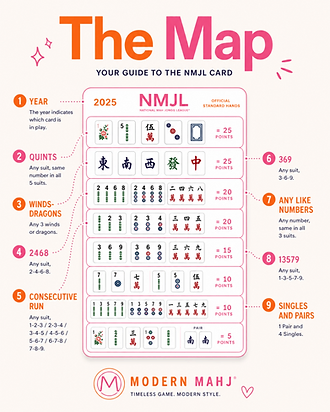 1
1Your guide to the NMJL card
See the whole card at a glance — every section, from Year Hands to Singles & Pairs, mapped out.
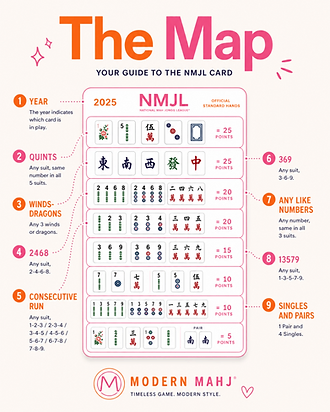 2
2Section-by-section breakdown
The numbered annotations walk you through each category of hands on the official card.
 3
3Relationships, not suits
Learn how color on the card shows suit relationships — same color means same suit.
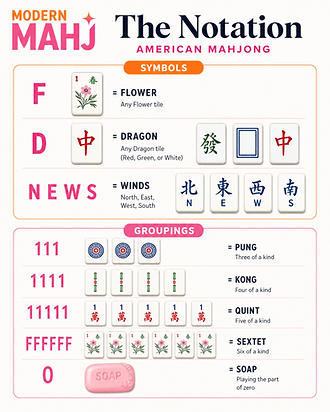 4
4Symbols & groupings
Every symbol decoded — F, D, NEWS, plus pungs, kongs, quints, sextets and soap.
 5
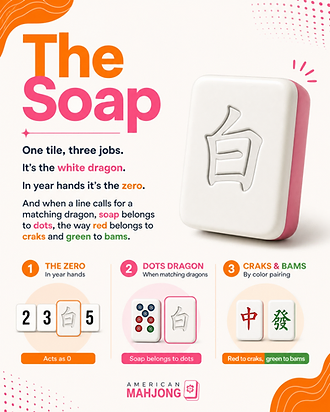
5One tile, three jobs
The white dragon as zero, as the dots dragon, and in red-to-craks / green-to-bams pairings.
 6
6Read the fine details
Patterns, parentheticals, suit limits and number restrictions — and why skipping them gets you dead.
 7
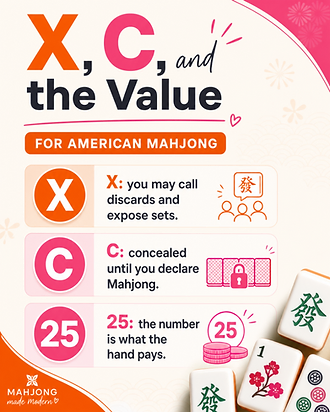
7Decode every line
X means you can call discards, C means concealed until Mahjong, and the number is what the hand pays.
More printables added every season — your suite keeps growing. ♡
Your membership keeps growing. Here's what's on the way — and you'll get it all the moment it lands.
Fresh themed packs every month.
A new tactical tip each week.
Deep-dive videos on advanced play.
Breakdowns of designer tile sets.
Fun challenges to sharpen your game.
Live sessions and Q&A with experts.
Connect with players nationwide.
Member-only deals on Mahjong gear.
Early access to limited tile releases.
New member resources are added regularly — your membership continues to grow.
A curated list of where to find affordable tiles, mats, and every little Mahjong essential — plus the organizations that keep the game alive.
Affordable starter sets to heirloom-grade acrylic tiles.
Everything that lives on (and around) the table.
Blogs, communities, and the official card.
Original tablescapes to spark your next Mahj night — pick a vibe, steal a detail, and pin your favorites to revisit later.
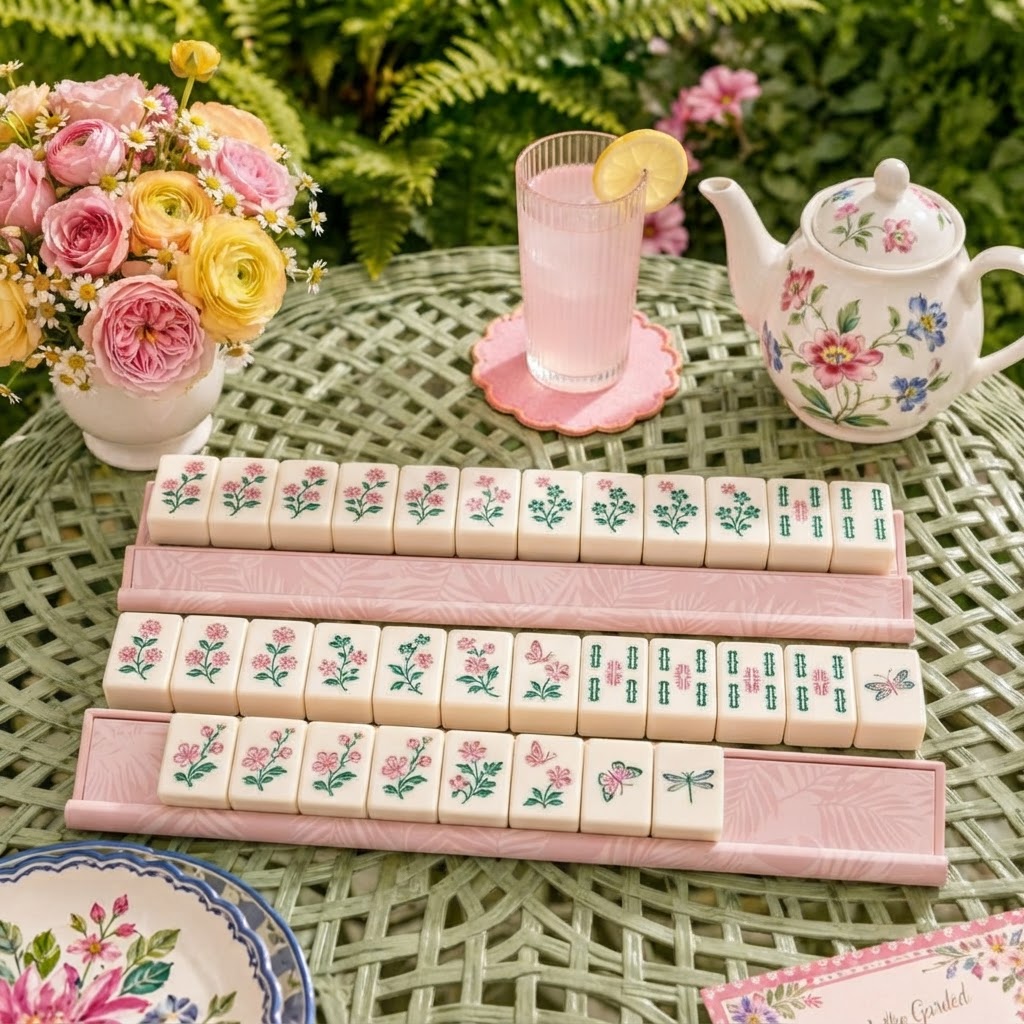 Garden Party
Sage linens, floral porcelain, pink lemonade. A whimsical afternoon affair.
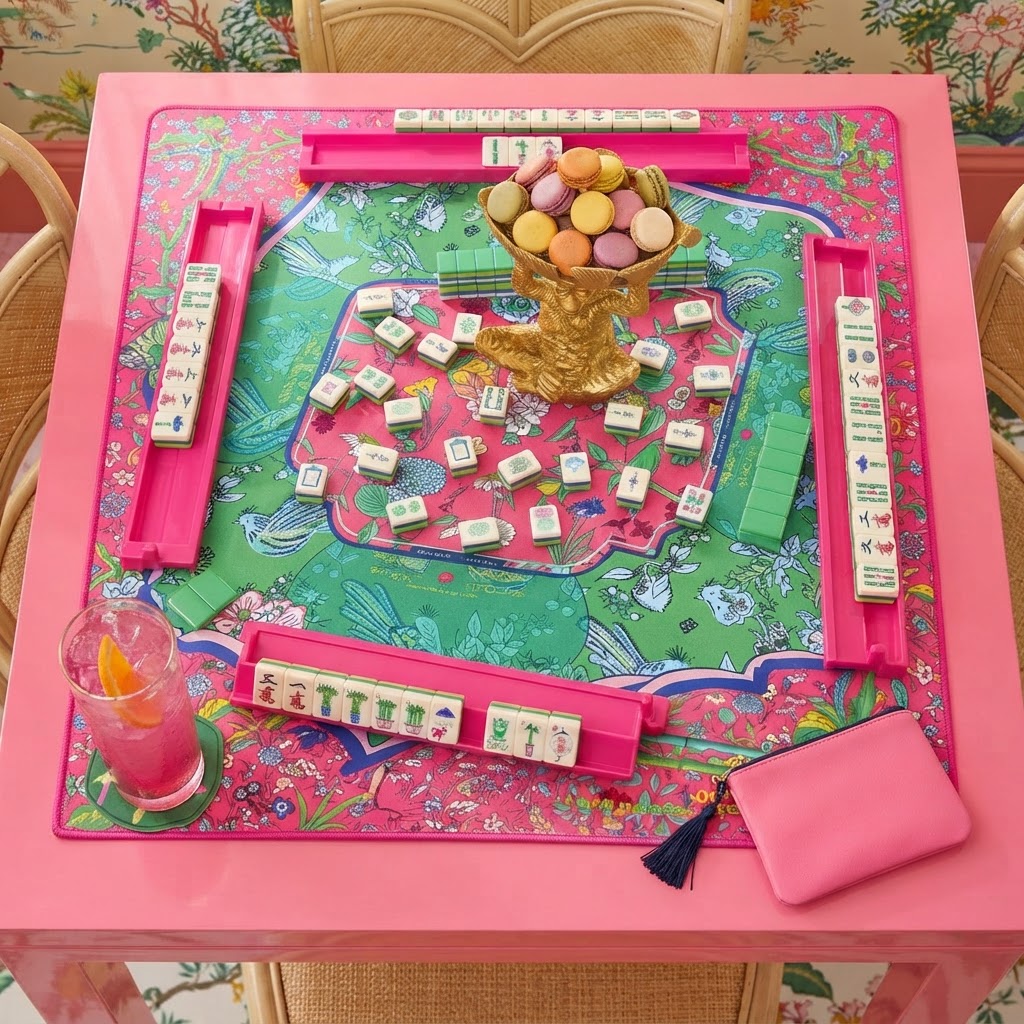
Save to PinterestMaximalistHot-pink racks, macarons, and a cheeky gold centerpiece. Maximalist joy.
Save to Pinterest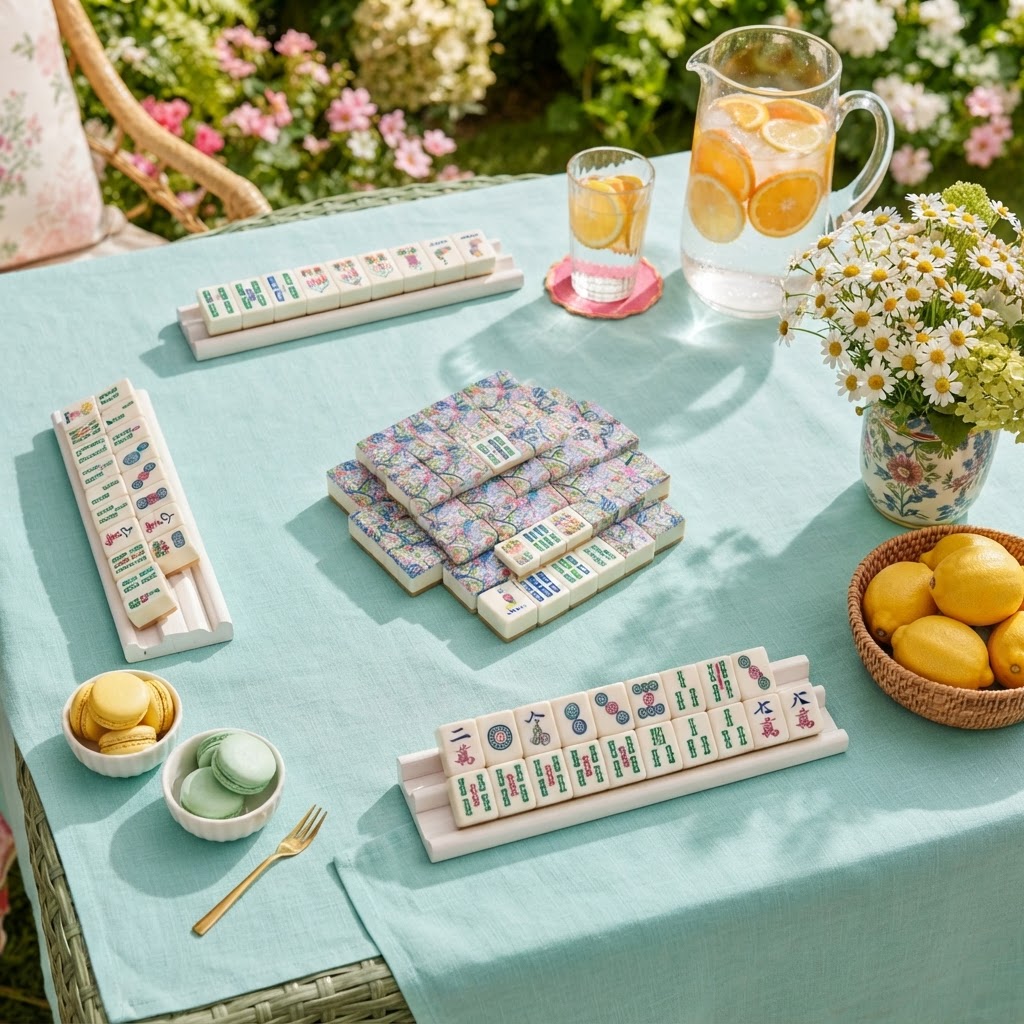 Summer Brunch
Aqua linen, citrus water, and daisies. Breezy summer play by the sea.
Save to Pinterest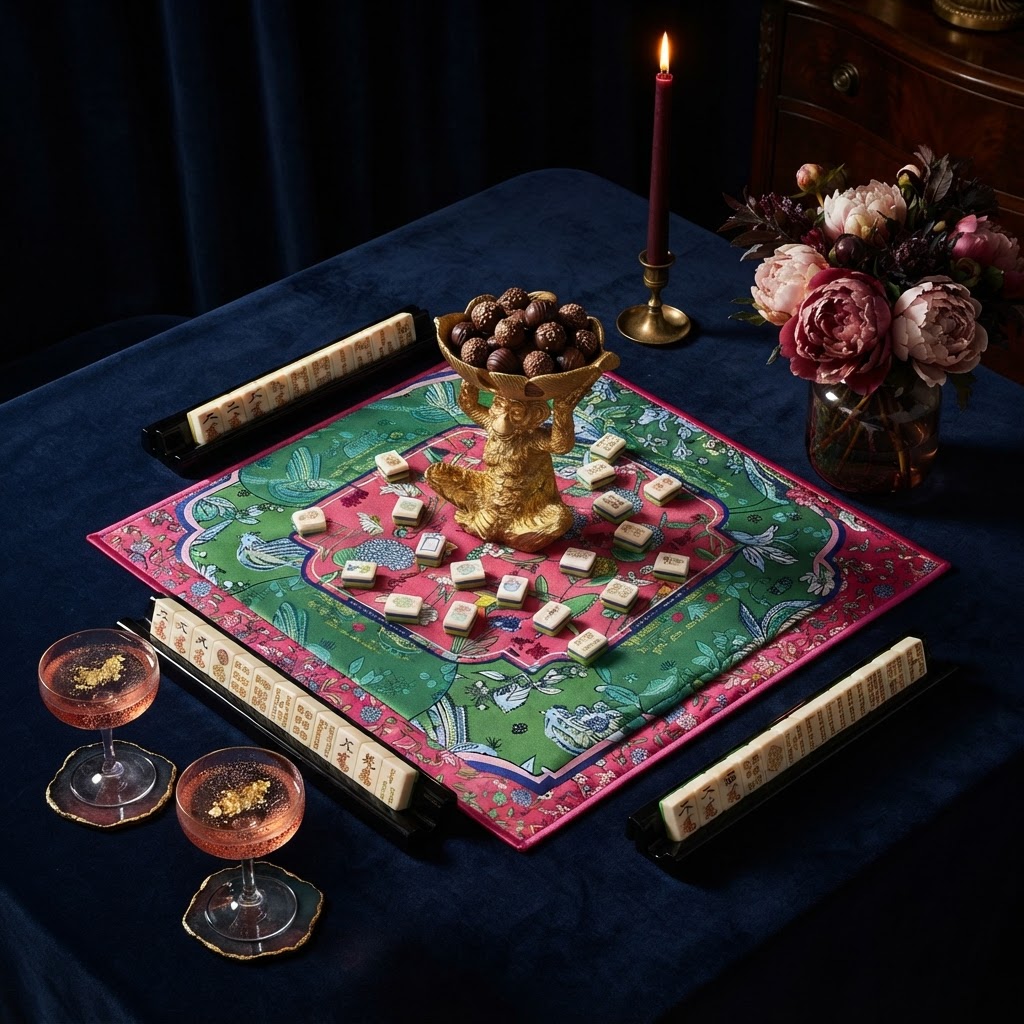 Evening Luxe
Navy velvet, gold-leaf tiles, and a rosy cocktail. Glamorous girls' night.
Save to Pinterest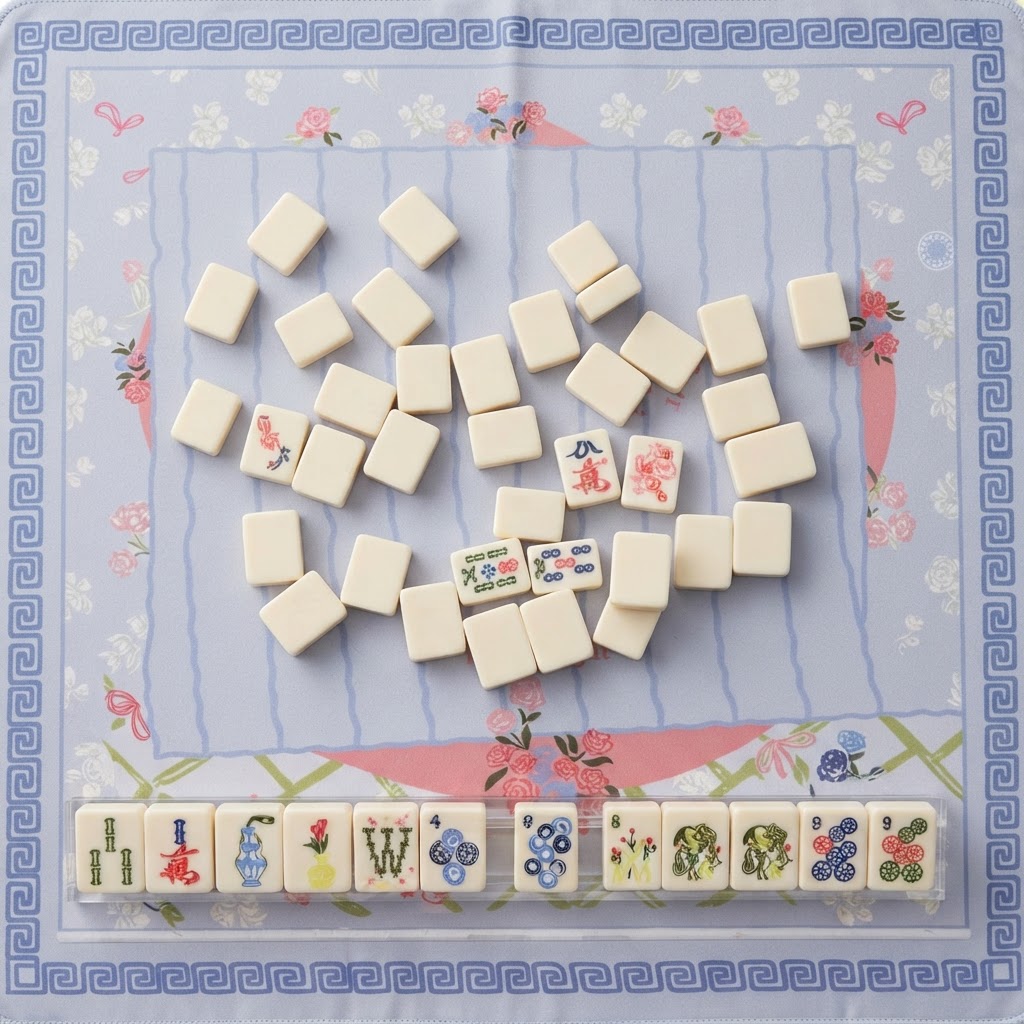 Soft Romance
A rose-strewn periwinkle mat, clear acrylic rack, soft and romantic.
Save to Pinterest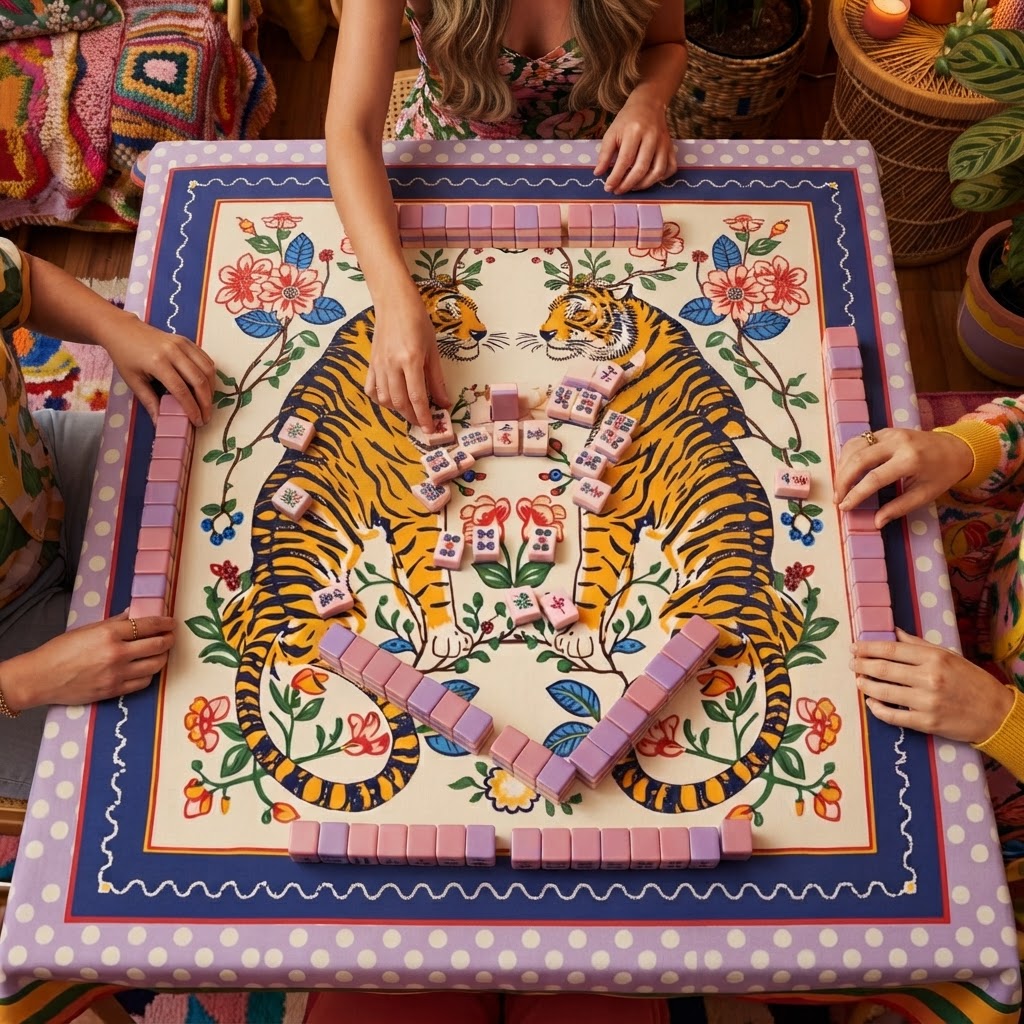 Maximalist
Cream mat, facing tigers and oversized florals — bold and cozy maximalism.
Save to Pinterest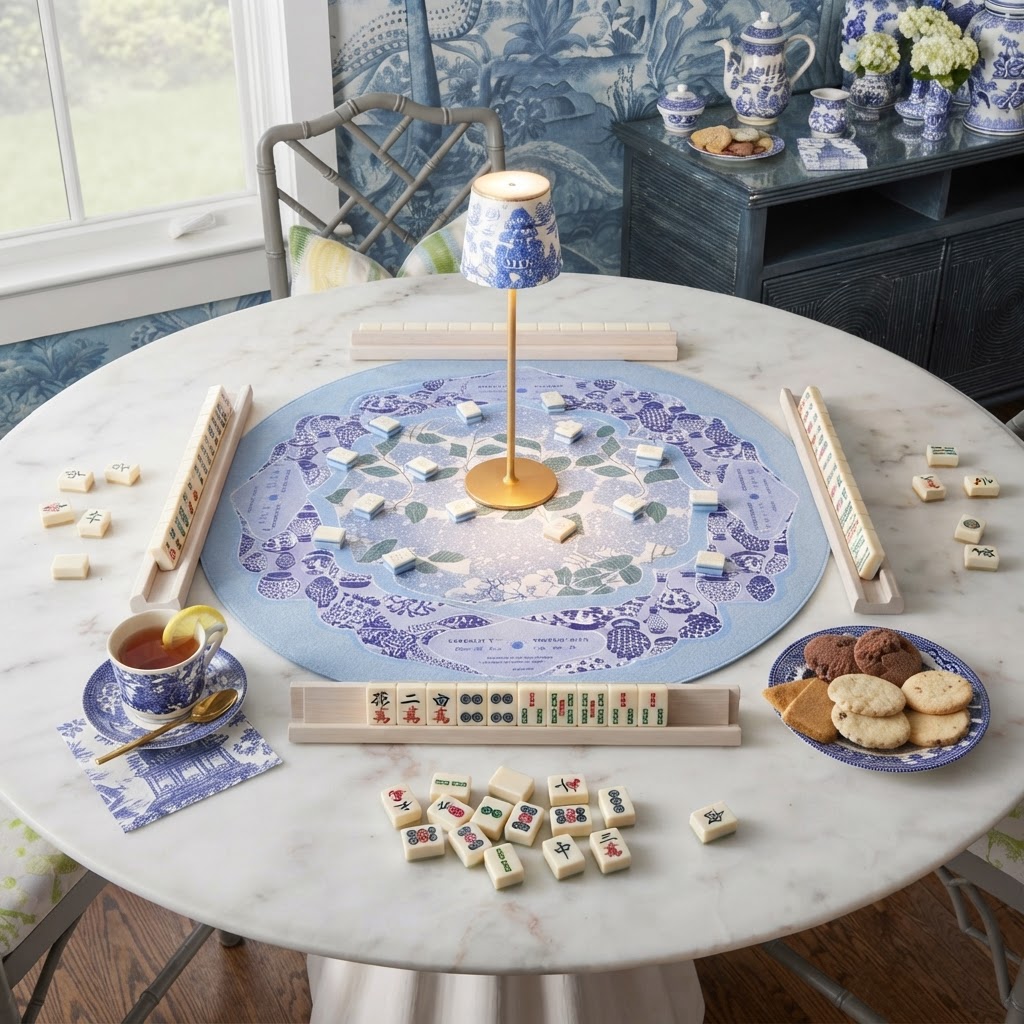 Chinoiserie
Marble table, gold lamp, blue-and-white ginger jars. Refined elegance.
Save to Pinterest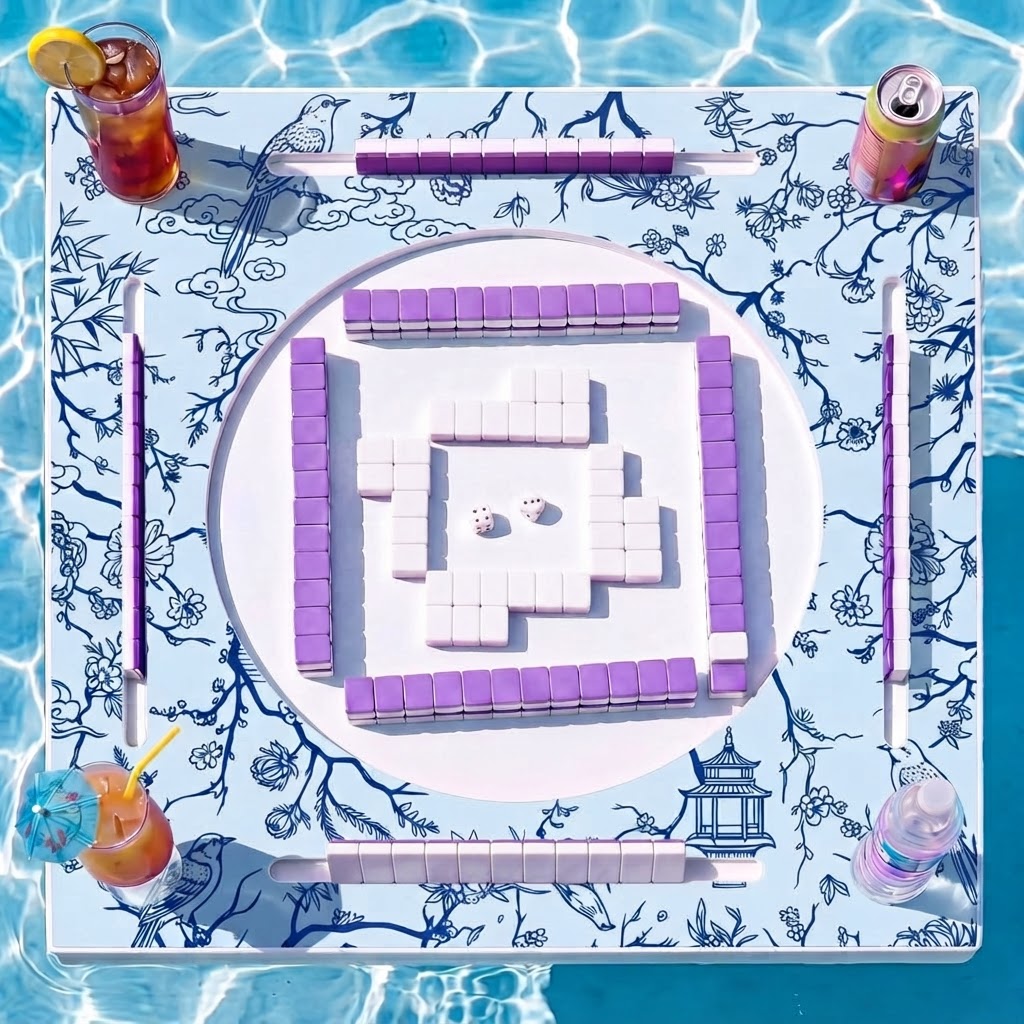 Poolside
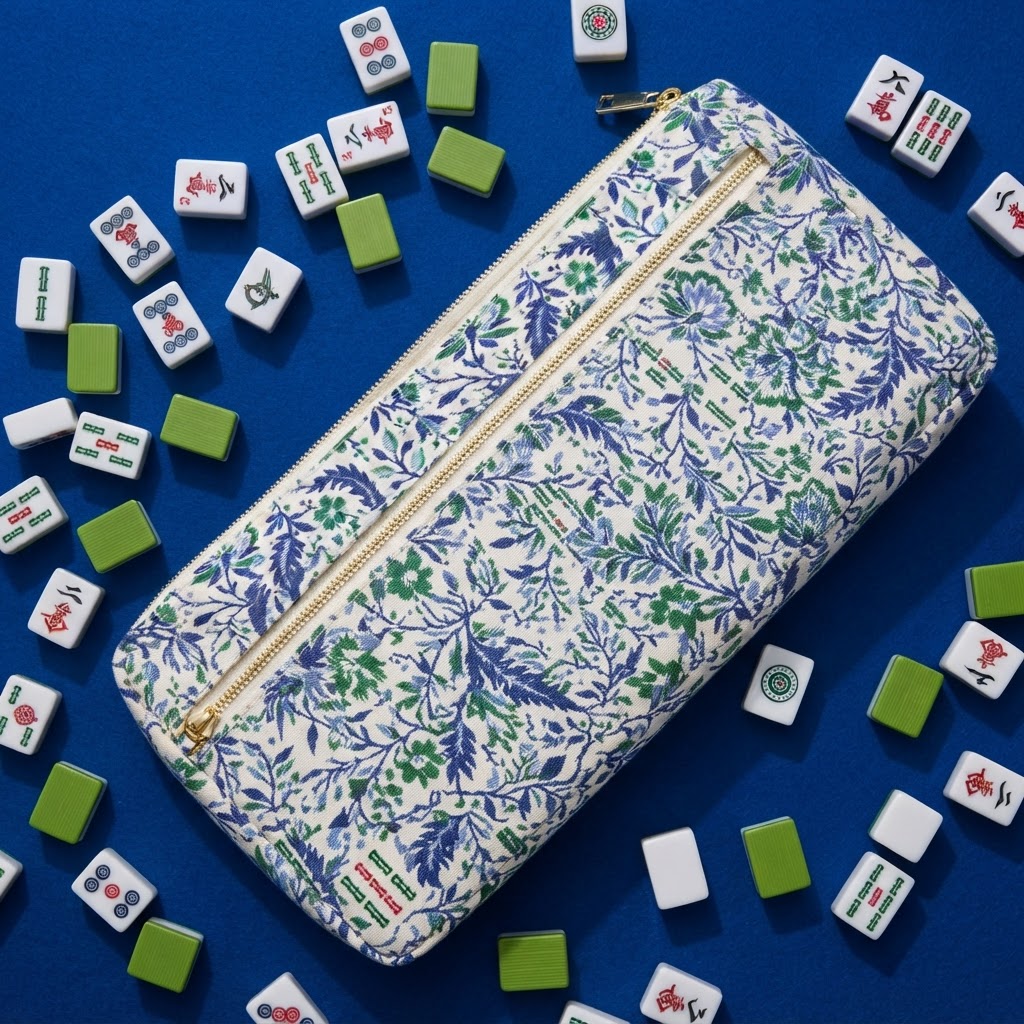 Bold Pop
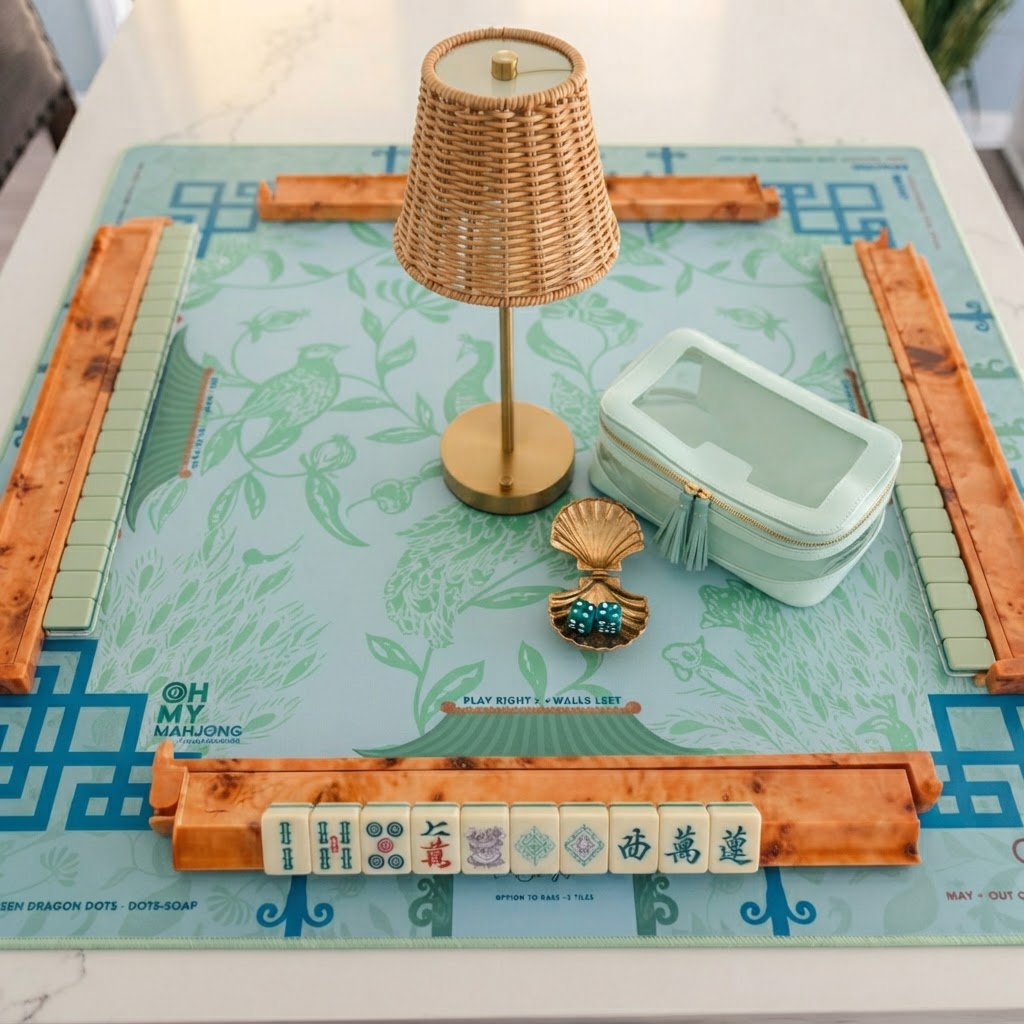 Earthy Botanical
Forest-green bird mat, burled wood racks, brass lamp. Warm and grounded.
Save to PinterestThese tablescapes are AI-generated and meant as ideas to spark your imagination. For the real deal, look under our Resources tab for amazing purchase options. ♡
More links added regularly — share your favorites and we'll feature them. ♡
Drop a note and I'll get back to you faster than East can draw.


